the influence of indian miniature art on amrita sher-gil
Amrita Sher-Gil, born in Budapest in 1913, is celebrated as a pioneering figure in Indian modernism. Though her life was tragically cut short in 1941, her artistic output remains influential, characterized by a distinctive fusion of Western techniques and Indian themes. Sher-Gil’s artistic evolution is particularly notable for its integration of Indian miniature art forms, reflecting her deep engagement with various traditional styles.
Sher-Gil’s early artistic development took place in Europe, where she received formal training at the Ecole des Beaux-Arts in Paris and the Accademia di Belle Arti in Florence. During the early 1930s, her work exhibited a strong European influence, evident in her self-portraits, still-life compositions, and nudes. These pieces reveal her command of academic painting techniques and her engagement with European masters like Paul Gauguin. Her early work is marked by a focus on introspective themes and an exploration of personal identity, characteristics that would persist throughout her career.
Reconnection With Indian Art Traditions
In 1934, Sher-Gil returned to India, driven by a deep-seated longing to reconnect with her cultural roots. This period marked a significant shift in her artistic direction. Her exposure to Indian miniature painting traditions, including Mughal art, the murals of Ajanta and Ellora, and Basohli miniatures, profoundly influenced her work. Basohli miniatures are known for their bold use of colours, intense expressions, and dynamic compositions. Originating from the Basohli region in the 17th century, these paintings are distinguished by their vivid, contrasting colours, stylised faces, and the depiction of mythological and romantic themes.
Integration Of Miniature Art Elements
The influence of Mughal art is also evident in works like "The Bride's Toilet," where the rich, decorative elements and the portrayal of the bride’s contemplative moment reflect the intricate beauty of Mughal miniature paintings. Sher-Gil’s ability to blend these traditional elements with her modernist sensibilities results in a distinctive and compelling body of work. Sher-Gil’s later works demonstrate a notable integration of miniature art elements. Indian miniatures are characterized by their flat, intricate patterns, and symbolic representations. Sher-Gil adapted these stylistic features to enhance her own artistic practice. This integration is evident in her use of colour and composition, which often reflect the influences of Mughal paintings and the Basohli tradition.
In her painting "Bride's Toilet," Sher-Gil employs a frontal perspective and rich, jewel-like colours reminiscent of miniature art. The painting captures a poignant moment of a bride preparing for her wedding, with a focus on her reflective expression. This approach not only evokes the aesthetic qualities of Indian miniatures but also brings a new emotional depth to her work. This painting by Amrita Sher Gil is from 1937.
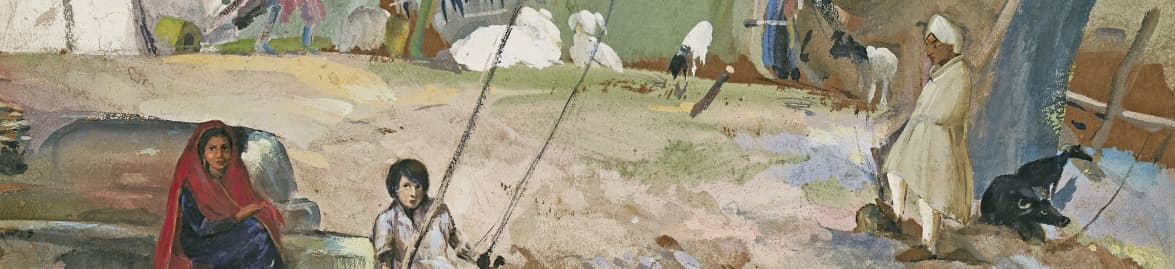
Similarly, "Village Scene" painted in 1938 illustrates Sher-Gil’s adaptation of miniature art techniques. The painting features vibrant colours and intricate details that evoke the traditional style of Basohli miniatures. The depiction of a rural scene with lively, decorative elements reflects Sher-Gil’s engagement with Indian artistic traditions while maintaining her unique artistic voice.
Depiction Of Indian Women
One of the most striking aspects of Sher-Gil’s work is her portrayal of Indian women. Her paintings often focus on the daily lives and intimate moments of women, capturing their experiences with a blend of elegance and realism. This focus is informed by the rich traditions of Indian art, which often depicted women in domestic and ritualistic contexts. In "Women Bathing," Sher-Gil presents rural women engaged in their daily bathing rituals. The painting’s reduced forms and bold contours echo the stylistic features of Indian miniatures, while the muted colour palette and serene expressions of the figures convey a sense of timelessness and emotional depth. Sher-Gil’s portrayal of these women highlights their strength and resilience, offering a nuanced view of their lives.
Social Resilience & Spiritual Dedication
Sher-Gil’s paintings are not merely artistic expressions but also serve as social commentaries. Her focus on the lives of ordinary people, particularly women from rural backgrounds, challenges romanticized views of Indian society. Works such as "Hill Women" and "Brahmacharis" address themes of social resilience and spiritual dedication, providing a critical perspective on the socio-cultural landscape of her time. In "Hill Women," Sher-Gil depicts the harsh realities faced by women in the hilly regions of India. The stark background and the portrayal of the women’s strength highlight their resilience, contrasting with the idealized representations often seen in Western art. Similarly, "Brahmacharis" features young ascetics in a minimalist setting, emphasizing their austere lifestyle and spiritual commitment. The simplicity of the composition and the reflective expressions of the figures underscore the existential themes central to Sher-Gil’s work.
Sher-Gil’s integration of Indian miniature art elements into her work represents a significant moment in the development of modern Indian art. Her ability to merge Western techniques with traditional Indian themes paved the way for future artists to explore and express their cultural heritage within a contemporary context. Sher-Gil’s innovative approach has left a lasting legacy, influencing the discourse on Indian modernism and inspiring generations of artists. Sher-Gil’s work stands as a testament to the power of cross-cultural exchange and the potential for artistic innovation that arises from such interactions. By incorporating elements of Indian miniature art into her practice, Sher-Gil created a unique and influential body of work that remains a cornerstone of Indian modernist art.
Also Read : Amrita Sher Gil - Bridging East & West Through Art